Monday, November 29, 2010

WebQuest

http://questgarden.com/105/37/5/100620110541/

This unit will be a Webquest exploring Photojournalism. Students will create a photo essay after researching photojournalism utilizing the URL's provided for examination in the Webquest. This will include what photojournalism is, the history of photojournalism, famous photojournalists such as Gordon Parks, and photojournalism institutions such as Time Life and National Geographic.

This seems like an interesting activity to do with students to discuss learning and language through photographs.

Sunday, November 21, 2010

RSA Animate - Changing Education Paradigms


"The Arts especially address the idea of Aesthetic experience. An aesthetic experience is one in which your senses are operating at their peak. When you're present in the current moment. When you are resonating with the excitement of this thing that you're experiencing. When you are fully alive. And anaesthetic is when you shut your senses off,and deaden yourself what's happening. And a lot of these drugs are that. We're getting our children through education by anaesthetising them. And I think we should be doing the exact opposite. We shouldn't be putting them asleep, we should be waking them up, to what they have inside of themselves."
-Sir Ken Robinson

Double Self Portraits


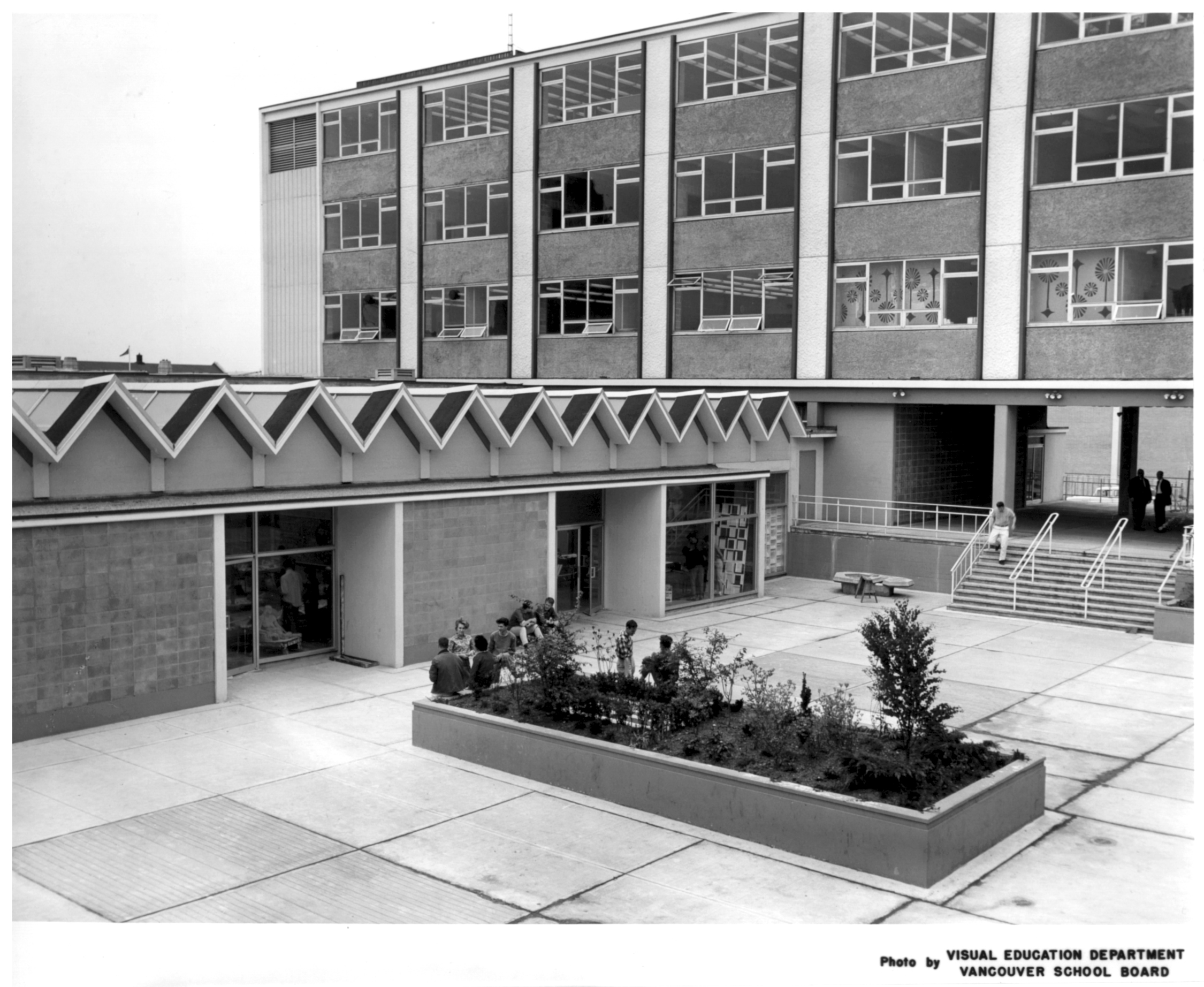
Ideal school

photo found @ http://www.ecuad.ca/about/history

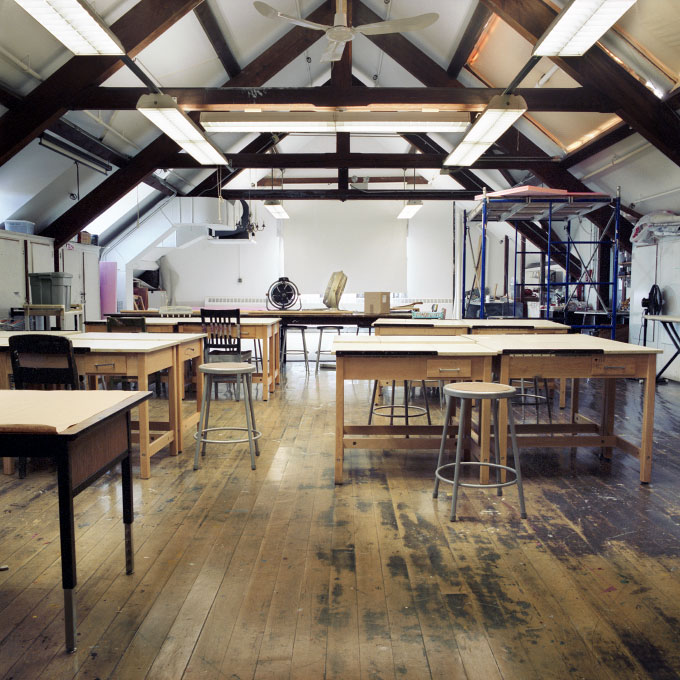
1. My ideal school to teach at would probably look a lot like the ideal school I would like to attend: multi-story building with large windows in the classrooms for plenty of natural light, wide halls, large courtyards, extensive library, a gallery space, located on several acres in the New England or Portland area... large class rooms with small class size and computers available for all students.

2. I would like to teach at a school geared towards the arts, such as SCAD (but for kids age 13-18). Students at magnet schools seem to be more involved and committed to their school work. Students would have to take core math/english/science classes, but the majority of their time would be spend developing their creative stills and learning through the arts.

3. Teachers, students and parents would be have equal investment in the school. The school would be headed by a resident artist/professor with extensive experience in the arts and teaching.

4. Big enough to promote diversity and social networking but small enough so that students are familiar with all the teachers (even ones they don't have) and most of the students. 6 dedicated classrooms per floor, 3 story building.

5. See question 1.

6. Arts and core adecemics would run August-April with optional summer courses (fine art, dance, music, theater, architecture, design) available May-July.

7. The day would start at 9:30 with morning assembly (on Monday and Thursday) to discuss upcoming events, performances, gallery opening/closing, community projects and guest speakers. Classes would follow until 11:30 when all students would meet for lunch in the open dining area. Class would resume at 12:15 and continue until 3:00. Students have the option to return to their studio classes to work on projects after school until 6pm. Seniors will have access to their personal studios 24-7, with the understanding that they will be respectful and responsible.

8. Hiring criteria would include a love of the arts, creativity, alternative learning and teaching. Teachers don't necessarily need vast experience since it is a teaching school, for both the students and the teachers.

9. In addition to tests in their core classes, students would be assessed based on criteria specifics left up to the individual teachers. Class critiques and a final portfolio will be expected to be submitted at the end of each academic year. Equal emphasis will be put on the students development of their technical skills and the construction of a well-developed concept for each project,

10. Tablets could be used as an alternative to sketch books (depending on the students personal preference), textbooks would be provided on kindle or ipad, computers would be provided and available in all classrooms. Students would connect with other students around the country via skype to collaborate on certain projects and gallery openings and performances would be broadcast live on the internet during the events.

11. Parents are expected to be involved in their students progress and activities at the school. Parental involvement will be a key component in the students education and progression throughout their time at the school. Students will also be involed in several community projects thoughout the year including art activites with younger kids, other schools and at hospitals. Planning and realizing a city beautification projects will also be a part of the students senior year.

http://cdn.lightgalleries.net/4bd5ebf72b28c/images/artstudio_winsor-2.jpg


http://picasaweb.google.com/lh/photo/z-k4Ve7rV3K_YRglpfqdgg


http://wklondon.typepad.com/.a/6a00d8341c823e53ef0120a5645157970b-popup
(can you play nicely with other creative minds?)


http://www.scadconnector.com/wp-content/uploads/2009/01/knowlespic1.jpg


http://upload.wikimedia.org/wikipedia/commons/3/34/SCAD_Sidewalk_Arts_Festival.jpg

Monday, November 15, 2010

SAT Essay Responce

The response seemed incomplete and repetitive. The author made several statements but never backed it up with a "why". The writer used several words over and over, instead of using synonyms. The author did not support their reasoning with example from the readings like the prompt asked.
2/6 (SAT scoring)

Sunday, November 7, 2010

Teens, Video Games and Civics

I don't feel that this study presented any new or eye-opening information to me that I haven't seen or head before. Teen gaming has been a hot topic for at least a decade and there aren't may aspects of this issue that have yet to be explored and this article fell flat with me. I don't feel like I learned anything by reading it. I'm not sure the link/relevance between gaming and civic commitments either; the article didn't explain why this information needed to be gathered and why it is important.

Open-ended questions in response to the article http://pewresearch.org/pubs/953/teens-video-games-and-civics

1. "The report...is based on a national, random digit dial telephone survey of 1102 parent-teen pairs. The teens we interviewed were ages 12 to 17." This is a relatively small sample size considering there are 25-28 millions teens in the united states according to the 2000 United States census. The researchers also limited their sample to people who have land lines. How can the researchers confidently report their findings when it isn't an accurate snapshot of the American teenage/parents pair population?

2. What is this study trying to get the reader to think about? Why and why is this study relevant to people in the field of education?

3. Is using methods of gaming to reach kids educationally crossing the line? There are educational games out there, but they aren't designed to be used by the school system. How are educational games different that games used by schools to teach students?

4. What do the researchers want the reader to take away from this information? The information presented doesn't seem to be important or shocking enough to make a call for action.

5. The article stated "this is the first large-scale study to examine the relationship between specific gaming experiences and teens' civic activities and commitments," but they seemed to focus more on the gaming aspect and never really focused what they meant by or what they found out about the 'civic activities and commitments." They didn't interview people old enough to vote so how do they expect kids to have a real understanding of these civic commitments?