Monday, December 6, 2010

Final Learning Journal Prompt:

1. What three things did you learn about teaching and learning that you did not know before?

-Lesson plans; I'm sure I have heard the term before, but it never meant anything to me. I did not realize that curriculum and teachers have very specific goals for student. It is starting to make sense; all the monotonous things we had to do in high school English actually meant something, a benchmark was (hopefully) being met.
-Resources; through out the semester, I was able to gather several good resources from student 'show and tell' sites to sites included in chapter presentations, as well as web pages presented by the instructor. And not only did I learn about these site, I was introduced to Delicious, a great way to bookmark all the pages.
-Google; not just a web browser I learned. Learning about google doc, google presentations and google sites was probably the best web tool I took away from this course. My family members ask to see my work, and Ive never had a good method to show them, but now I do. I used google site as a tool to show my creative work as well as my educational portfolio. Now my family can go online and see what I've been doing.

2. In what ways has the content in this course effected your views of teaching and learning?

-It made me realize that a lot goes into the planning of teaching. It sometimes took me hours to create a lesson plan, and to think that you need 5 a week seems a but overwhelming. I've always known that I clam up when speaking in front of a group of people, but I learned that as look as you act like you know what you're doing, most of the time, the students wont have a feeding frenzy on your insecurities.
-Also, it's not as easy as I thought. It's easy for me to say I want to be a teacher, but it's another to actually do it. Learning about different methods of teaching, kids of school and ways of learning have made it easier to imagine myself in the school system.

3. What questions do you have about integrating technology into the curriculum?

-How do you know what you are "allowed" to do? If I wanted my student to use their cells phone as a polling tool during class and an administrator found out, what would happen? When kids come to school, they are told not to use their phones, computer or games because they are a distraction. If a teacher allows the use of these devices, will they be seen as enabling poor behavior?

4. What did you like most about this course? In what ways can the instructor improve this course?

-I liked the casual, open format of the course. I never felt as though I was being lecture at; it was more conversational. I liked having freedom with the assignments; a guide was given of what should be included in the lessons plans, but I was free to create it about whatever I wanted. I also liked the philosophy "know when to break the rules". So often, teacher mark down for not following instructions exactly, but sometimes, certain methods work better. As long as you can justify the rule breaking and there is a good reason, I think it's ok not to follow them.

Social Media for Social Change

Considering the economic status of late, I feel it has become nearly impossible to provide every student with a personal computer and monthly internet access. A more realistic and practical goal would be to ensure every school has enough computers in a lab stetting available for use during the school day, after school and on the weekend. In addition to in-school resources, I feel sometimes educators tend to over look certain resources that are already out there, but just being overlook. For example, the public library. Because of the internet explosion, kids don't go to the library anymore for research; out of sight, out of mind. They forget that the public library has dozens of computers available for use, and not just for research purposes. Schools should have field trips to the libraries and reintroduce students to its purpose and function.

Schools could also organize a fundraiser for those students who arent fortunate enough to have access to a personal computer in their homes. This activity would not only enhance the students like throught the attainment and use of a personal computer, but also could function as a community-enrichment activity. Similarly, a teacher could start a blog site that talks about the stuggles for funding with a paypal link for people to be able to donate via the internet, if they dont happen to live in the same city or even state as the school/person in need. Students could open an online store and sell art work they create at school to raise funds (etsy.com).

Good examples of social media being used for social change would be:

1. Kiva : http://www.kiva.org/

Kiva's mission is to connect people, through lending, for the sake of alleviating poverty.

Kiva empowers individuals to lend to an entrepreneur across the globe. By combining microfinance with the internet, Kiva is creating a global community of people connected through lending.

Kiva was born of the following beliefs:

  • People are by nature generous, and will help others if given the opportunity to do so in a transparent, accountable way.
  • The poor are highly motivated and can be very successful when given an opportunity.
  • By connecting people we can create relationships beyond financial transactions, and build a global community expressing support and encouragement of one another.

Kiva promotes:

  • Dignity: Kiva encourages partnership relationships as opposed to benefactor relationships. Partnership relationships are characterized by mutual dignity and respect.
  • Accountability: Loans encourage more accountability than donations where repayment is not expected.
  • Transparency: The Kiva website is an open platform where communication can flow freely around the world.

As of November 2009, Kiva has facilitated over $100 million in loans.

2. The Well that Twitter Built : http://mashable.com/2008/09/19/the-well-that-twitter-built/
A certain dollar amount was donated for every click through. More websites with heavy traffic and socially aware user should dedicate at least one day to this kind of activity.

3. Etsy : http://www.etsy.com/
Users are able to sell their handmade goods. Promotes an awaness of the arts, and financial outlet and larger buying audience for people who struggle to sell locally.

Monday, November 29, 2010

WebQuest

http://questgarden.com/105/37/5/100620110541/

This unit will be a Webquest exploring Photojournalism. Students will create a photo essay after researching photojournalism utilizing the URL's provided for examination in the Webquest. This will include what photojournalism is, the history of photojournalism, famous photojournalists such as Gordon Parks, and photojournalism institutions such as Time Life and National Geographic.

This seems like an interesting activity to do with students to discuss learning and language through photographs.

Sunday, November 21, 2010

RSA Animate - Changing Education Paradigms


"The Arts especially address the idea of Aesthetic experience. An aesthetic experience is one in which your senses are operating at their peak. When you're present in the current moment. When you are resonating with the excitement of this thing that you're experiencing. When you are fully alive. And anaesthetic is when you shut your senses off,and deaden yourself what's happening. And a lot of these drugs are that. We're getting our children through education by anaesthetising them. And I think we should be doing the exact opposite. We shouldn't be putting them asleep, we should be waking them up, to what they have inside of themselves."
-Sir Ken Robinson

Double Self Portraits


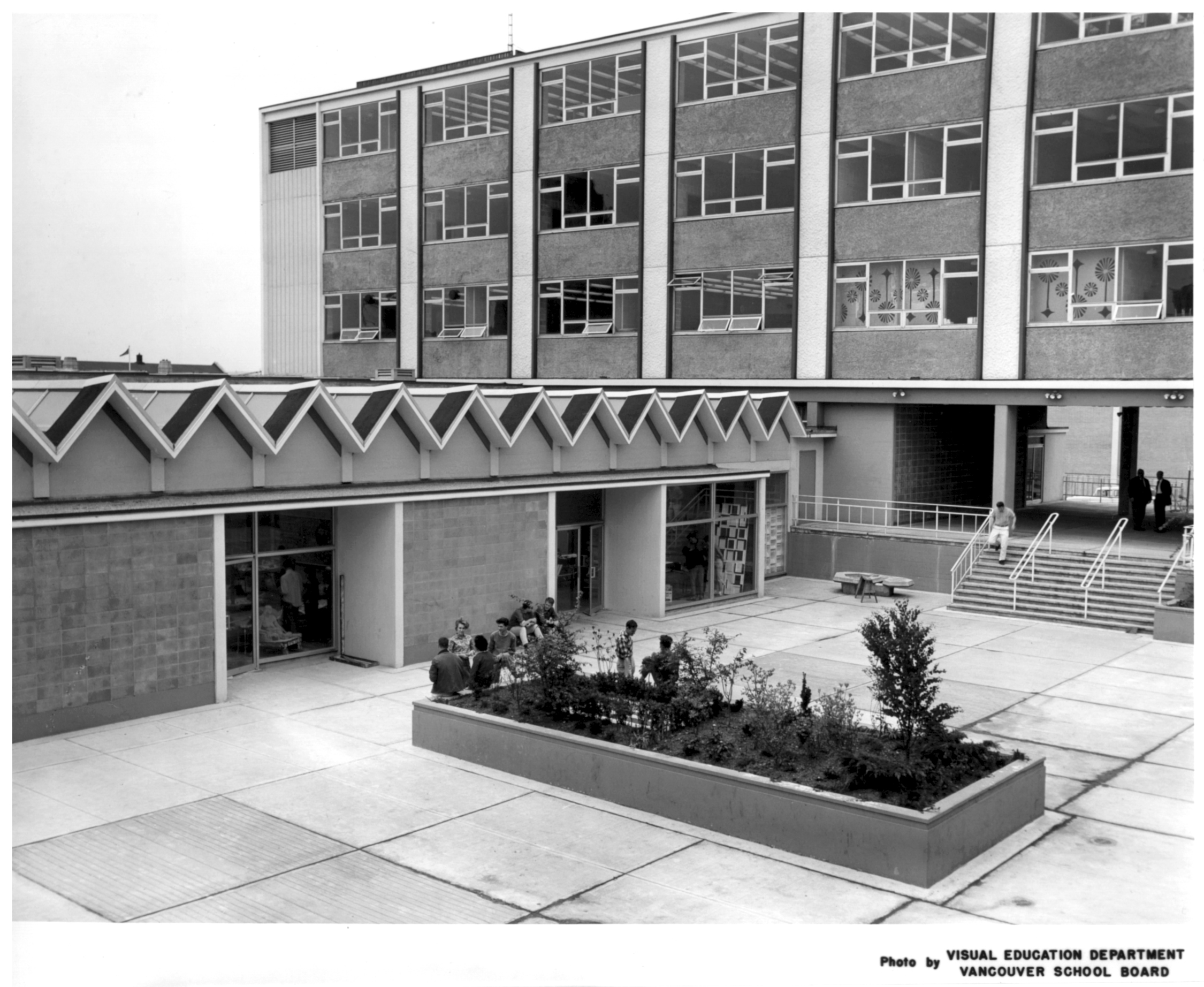
Ideal school

photo found @ http://www.ecuad.ca/about/history

1. My ideal school to teach at would probably look a lot like the ideal school I would like to attend: multi-story building with large windows in the classrooms for plenty of natural light, wide halls, large courtyards, extensive library, a gallery space, located on several acres in the New England or Portland area... large class rooms with small class size and computers available for all students.

2. I would like to teach at a school geared towards the arts, such as SCAD (but for kids age 13-18). Students at magnet schools seem to be more involved and committed to their school work. Students would have to take core math/english/science classes, but the majority of their time would be spend developing their creative stills and learning through the arts.

3. Teachers, students and parents would be have equal investment in the school. The school would be headed by a resident artist/professor with extensive experience in the arts and teaching.

4. Big enough to promote diversity and social networking but small enough so that students are familiar with all the teachers (even ones they don't have) and most of the students. 6 dedicated classrooms per floor, 3 story building.

5. See question 1.

6. Arts and core adecemics would run August-April with optional summer courses (fine art, dance, music, theater, architecture, design) available May-July.

7. The day would start at 9:30 with morning assembly (on Monday and Thursday) to discuss upcoming events, performances, gallery opening/closing, community projects and guest speakers. Classes would follow until 11:30 when all students would meet for lunch in the open dining area. Class would resume at 12:15 and continue until 3:00. Students have the option to return to their studio classes to work on projects after school until 6pm. Seniors will have access to their personal studios 24-7, with the understanding that they will be respectful and responsible.

8. Hiring criteria would include a love of the arts, creativity, alternative learning and teaching. Teachers don't necessarily need vast experience since it is a teaching school, for both the students and the teachers.

9. In addition to tests in their core classes, students would be assessed based on criteria specifics left up to the individual teachers. Class critiques and a final portfolio will be expected to be submitted at the end of each academic year. Equal emphasis will be put on the students development of their technical skills and the construction of a well-developed concept for each project,

10. Tablets could be used as an alternative to sketch books (depending on the students personal preference), textbooks would be provided on kindle or ipad, computers would be provided and available in all classrooms. Students would connect with other students around the country via skype to collaborate on certain projects and gallery openings and performances would be broadcast live on the internet during the events.

11. Parents are expected to be involved in their students progress and activities at the school. Parental involvement will be a key component in the students education and progression throughout their time at the school. Students will also be involed in several community projects thoughout the year including art activites with younger kids, other schools and at hospitals. Planning and realizing a city beautification projects will also be a part of the students senior year.

http://cdn.lightgalleries.net/4bd5ebf72b28c/images/artstudio_winsor-2.jpg


http://picasaweb.google.com/lh/photo/z-k4Ve7rV3K_YRglpfqdgg


http://wklondon.typepad.com/.a/6a00d8341c823e53ef0120a5645157970b-popup
(can you play nicely with other creative minds?)


http://www.scadconnector.com/wp-content/uploads/2009/01/knowlespic1.jpg


http://upload.wikimedia.org/wikipedia/commons/3/34/SCAD_Sidewalk_Arts_Festival.jpg

Monday, November 15, 2010

SAT Essay Responce

The response seemed incomplete and repetitive. The author made several statements but never backed it up with a "why". The writer used several words over and over, instead of using synonyms. The author did not support their reasoning with example from the readings like the prompt asked.
2/6 (SAT scoring)

Sunday, November 7, 2010

Teens, Video Games and Civics

I don't feel that this study presented any new or eye-opening information to me that I haven't seen or head before. Teen gaming has been a hot topic for at least a decade and there aren't may aspects of this issue that have yet to be explored and this article fell flat with me. I don't feel like I learned anything by reading it. I'm not sure the link/relevance between gaming and civic commitments either; the article didn't explain why this information needed to be gathered and why it is important.

Open-ended questions in response to the article http://pewresearch.org/pubs/953/teens-video-games-and-civics

1. "The report...is based on a national, random digit dial telephone survey of 1102 parent-teen pairs. The teens we interviewed were ages 12 to 17." This is a relatively small sample size considering there are 25-28 millions teens in the united states according to the 2000 United States census. The researchers also limited their sample to people who have land lines. How can the researchers confidently report their findings when it isn't an accurate snapshot of the American teenage/parents pair population?

2. What is this study trying to get the reader to think about? Why and why is this study relevant to people in the field of education?

3. Is using methods of gaming to reach kids educationally crossing the line? There are educational games out there, but they aren't designed to be used by the school system. How are educational games different that games used by schools to teach students?

4. What do the researchers want the reader to take away from this information? The information presented doesn't seem to be important or shocking enough to make a call for action.

5. The article stated "this is the first large-scale study to examine the relationship between specific gaming experiences and teens' civic activities and commitments," but they seemed to focus more on the gaming aspect and never really focused what they meant by or what they found out about the 'civic activities and commitments." They didn't interview people old enough to vote so how do they expect kids to have a real understanding of these civic commitments?

Sunday, October 17, 2010

LJ 3

1. CBS News

Colour Lovers

E! Online

Google News

Jersey Shore

New York times Learning Network

Print Magazine

The Gainesville Sun

Yahoo News

University of Florida


2. Most of the sites I chose to follow are news or entertainment related. However, none of them are truly meaning to me; I'm not a big Internet user and I don't think there is anything out there that would be important enough for me to have a synopsis of compiled on a single site.


3. Figuring out and beginning to use a new Internet tool can sometimes be challenging. I don’t do much web surfing or exploring; I mainly stick to checking email and researching. I don’t do gaming, streaming video or much face-booking/twittering. I typically get on the Internet, find what I’m looking for and then leave. I don’t think I’ll get in the habit of checking the Google reader often. I don’t think I’m interested in enough Internet based ‘things’ to spend the time to find/organize and check on the reader.


4. I could imagine a government teacher instructing their students to use google reader to keep up with current events and incorporate these stories into essays or projects. I don't see it being applicable in every department, aside from allowing students a summary of sites they already visit. I don't see Google reader as a way to discover new sites or network sites with other users.


5. I would like to know how the site could be more streamlined. For it being a snapshot of different sites, its very overwhelming and word heavy. The overall format of the site is confusing and difficult to use and I'm not sure how it is really applicable to education or used for educational purposes. It is hard for me to imagine scenarios where Google reader would be used in the classroom.

Friday, October 1, 2010

LJ 2

What is the role of technology in the classroom?
Technology is a valuable resource, but in and of itself will not fix the problems we are having with education gaps and learning deficits in the classroom. Merely providing students with the tools necessary to succeed will not ensure their success. Students should be taught how to use these tools, when to use them and which tools to use in different situations. Kids are using laptops, cellphone, social networking sites, YouTube, iPads and the like primarily for means of entertainment. It is through these means that we should be trying to reach (and teach) kids. We should show them how using the things that they are already using for 'entertainment' can be used for education.

What is the role of technology outside the classroom?
Some of the most technological advances over the past 30 years (portable computers, portable phone, GPS) were taken from military contracts. They started as products to make our lives easier but are fast entering into the world of absurdity. Technology has been defines as the science of the practical or industrial arts, but it is become much more than that. I feel (sometimes) that technologies roles outside the classroom (and maybe even in the classroom) is making us dumber. I was driving around Savannah with a friend with a map (a real map, not a cellphone Google map thing) and I found it difficult to understand it. And I realized that I have been relying on the GPS on my phone/computer for so long I had forgotten how to read a map. And I can't tell you the last time I actually researched something, really researched it. The days of spending hours in the library are over. But the up side is, it frees up a lot of time to do other things. I have mixed feeling about subject and I have a lot of conflicting thoughts. Maybe this class will help me figure it out.

In what ways can these to worlds overlap?
Teachers who ask students to make a website, or post their work on blogs. Keeping a notebook for an English class can be transferred online via blogs. Art projects can be scanned or photographed and posted on the web. Creating a video or telecast for a class project... using Kindle/iPads or tablet PCs as textbooks/notebooks (instead of having to buy/carry around 5 different textbooks).

In what ways should they be avoided?
I feel that students personal accounts on Facebook / Twitter / or personal blogs should not be a part of the curriculum. If the teacher wants those integrated into the classroom, students should have to create a new account, for academic purposes.

Sunday, September 26, 2010

Core Principals of Media Literacy Education

01. Sprint
02. Get their name in the minds of consumers, to showcase their service.
03. People who don't have Sprint as a cell phone provider, or people who have sprint that are not satisfied with their current data plan.
04. Sprint paid Yahoo to display their ad on Yahoo's main page.
05. People who are unaware of alternative cell phone carriers or plans could benefit from this ad. It might harm (upset) people who already have Sprint and have been paying more than the advertised amount.
06. You might go to their website, contract a representative by phone or visit one of their local retail stores. You may also talk to a friend that has Sprint to get a more personal experience of the company.
07. It's about getting the most service for the least amount of money. The ad emphasizes the word "everything" and the "$69.99" price tag.
08. The features and price per month are clearly displayed. The signing of a contract or 2 year agreement is implied.
09. The terms of the condition are left out. The consumer must do further research to discover the fine print.
10. The recognizable logo and large price are used to gain the attention of the consumer.
11. They use their logo because they know it is recognizable. The price might catch the attention of people who might be thinking about switching cell phone providers.
12. Parents might understand the ad differently than their children. Both parties may be using a cellphone, but have a very different relationship with the device. The parents are the ones that are most likely paying for the phone and the service. This ad seems to be marketing more towards the parents (emphasis on price and not 'cool' feature)
13. You might learn if you are more price conscious or bells-and-whistle driven.
14. This ad was made sometime in 2010, the result of a 2010 survey are quoted in the ad.
15. It is a rotating ad on Yahoo's homepage.
16. It is fact, with some of the information written in fine print.
17. I think its pretty credible. Its a large company with a lot at stake and a lot to lose if they mislead people.
18. American Consumer Satisfaction Index.

http://anymobileanytime.sprint.com/index.php?ECID=MA:AB:20100819:AMAT:OUR69:GPH:300x250&time=1285592256275476

Tuesday, August 31, 2010

LJ 1

I can honestly say that I'm not sure what "what are your expectations for this class" means. It seems that every semester the question gets asked and I write something down that sounds good, something that I know the teacher wants to hear. I usually just look at the objectives on the syllabus and that's the answer. I don't think I have expectations and I don't mind. I am coming in with an open mind, and willing to absorb anything that is thrown at me. I don't want to set out what I think should be the predetermined objectives that I wish to gain knowledge in this semester. I don't really know what to expect from this class. But if the first two classes are any indicator to what is in store for the rest of the semester, I am satisfied. I like being engaged in group discussion (although group activities/projects is the bane of my existence) and incorporating creativity into the classroom environment. I am working toward my Bachelor of Fine Arts and try take every opportunity to do something creative with assigned projects. I guess if I had to name an expectation, it would be to become a better educator. I want to be challenged, intrigued and educated.

I'm not sure what I want to learn because I don't think I know enough about what is 'out there'. It's been over 7 years since I was in a high school classroom setting; before YouTube, smart phones, text messaging, Facebook, MP3 players and DVR's. So I guess I need to learn what is happening in the classroom today; what kind of technology is being used and what kind of technology kids are expected to know how to use.