Monday, December 6, 2010

Final Learning Journal Prompt:

1. What three things did you learn about teaching and learning that you did not know before?

-Lesson plans; I'm sure I have heard the term before, but it never meant anything to me. I did not realize that curriculum and teachers have very specific goals for student. It is starting to make sense; all the monotonous things we had to do in high school English actually meant something, a benchmark was (hopefully) being met.
-Resources; through out the semester, I was able to gather several good resources from student 'show and tell' sites to sites included in chapter presentations, as well as web pages presented by the instructor. And not only did I learn about these site, I was introduced to Delicious, a great way to bookmark all the pages.
-Google; not just a web browser I learned. Learning about google doc, google presentations and google sites was probably the best web tool I took away from this course. My family members ask to see my work, and Ive never had a good method to show them, but now I do. I used google site as a tool to show my creative work as well as my educational portfolio. Now my family can go online and see what I've been doing.

2. In what ways has the content in this course effected your views of teaching and learning?

-It made me realize that a lot goes into the planning of teaching. It sometimes took me hours to create a lesson plan, and to think that you need 5 a week seems a but overwhelming. I've always known that I clam up when speaking in front of a group of people, but I learned that as look as you act like you know what you're doing, most of the time, the students wont have a feeding frenzy on your insecurities.
-Also, it's not as easy as I thought. It's easy for me to say I want to be a teacher, but it's another to actually do it. Learning about different methods of teaching, kids of school and ways of learning have made it easier to imagine myself in the school system.

3. What questions do you have about integrating technology into the curriculum?

-How do you know what you are "allowed" to do? If I wanted my student to use their cells phone as a polling tool during class and an administrator found out, what would happen? When kids come to school, they are told not to use their phones, computer or games because they are a distraction. If a teacher allows the use of these devices, will they be seen as enabling poor behavior?

4. What did you like most about this course? In what ways can the instructor improve this course?

-I liked the casual, open format of the course. I never felt as though I was being lecture at; it was more conversational. I liked having freedom with the assignments; a guide was given of what should be included in the lessons plans, but I was free to create it about whatever I wanted. I also liked the philosophy "know when to break the rules". So often, teacher mark down for not following instructions exactly, but sometimes, certain methods work better. As long as you can justify the rule breaking and there is a good reason, I think it's ok not to follow them.

Social Media for Social Change

Considering the economic status of late, I feel it has become nearly impossible to provide every student with a personal computer and monthly internet access. A more realistic and practical goal would be to ensure every school has enough computers in a lab stetting available for use during the school day, after school and on the weekend. In addition to in-school resources, I feel sometimes educators tend to over look certain resources that are already out there, but just being overlook. For example, the public library. Because of the internet explosion, kids don't go to the library anymore for research; out of sight, out of mind. They forget that the public library has dozens of computers available for use, and not just for research purposes. Schools should have field trips to the libraries and reintroduce students to its purpose and function.

Schools could also organize a fundraiser for those students who arent fortunate enough to have access to a personal computer in their homes. This activity would not only enhance the students like throught the attainment and use of a personal computer, but also could function as a community-enrichment activity. Similarly, a teacher could start a blog site that talks about the stuggles for funding with a paypal link for people to be able to donate via the internet, if they dont happen to live in the same city or even state as the school/person in need. Students could open an online store and sell art work they create at school to raise funds (etsy.com).

Good examples of social media being used for social change would be:

1. Kiva : http://www.kiva.org/

Kiva's mission is to connect people, through lending, for the sake of alleviating poverty.

Kiva empowers individuals to lend to an entrepreneur across the globe. By combining microfinance with the internet, Kiva is creating a global community of people connected through lending.

Kiva was born of the following beliefs:

  • People are by nature generous, and will help others if given the opportunity to do so in a transparent, accountable way.
  • The poor are highly motivated and can be very successful when given an opportunity.
  • By connecting people we can create relationships beyond financial transactions, and build a global community expressing support and encouragement of one another.

Kiva promotes:

  • Dignity: Kiva encourages partnership relationships as opposed to benefactor relationships. Partnership relationships are characterized by mutual dignity and respect.
  • Accountability: Loans encourage more accountability than donations where repayment is not expected.
  • Transparency: The Kiva website is an open platform where communication can flow freely around the world.

As of November 2009, Kiva has facilitated over $100 million in loans.

2. The Well that Twitter Built : http://mashable.com/2008/09/19/the-well-that-twitter-built/
A certain dollar amount was donated for every click through. More websites with heavy traffic and socially aware user should dedicate at least one day to this kind of activity.

3. Etsy : http://www.etsy.com/
Users are able to sell their handmade goods. Promotes an awaness of the arts, and financial outlet and larger buying audience for people who struggle to sell locally.

Monday, November 29, 2010

WebQuest

http://questgarden.com/105/37/5/100620110541/

This unit will be a Webquest exploring Photojournalism. Students will create a photo essay after researching photojournalism utilizing the URL's provided for examination in the Webquest. This will include what photojournalism is, the history of photojournalism, famous photojournalists such as Gordon Parks, and photojournalism institutions such as Time Life and National Geographic.

This seems like an interesting activity to do with students to discuss learning and language through photographs.

Sunday, November 21, 2010

RSA Animate - Changing Education Paradigms


"The Arts especially address the idea of Aesthetic experience. An aesthetic experience is one in which your senses are operating at their peak. When you're present in the current moment. When you are resonating with the excitement of this thing that you're experiencing. When you are fully alive. And anaesthetic is when you shut your senses off,and deaden yourself what's happening. And a lot of these drugs are that. We're getting our children through education by anaesthetising them. And I think we should be doing the exact opposite. We shouldn't be putting them asleep, we should be waking them up, to what they have inside of themselves."
-Sir Ken Robinson

Double Self Portraits


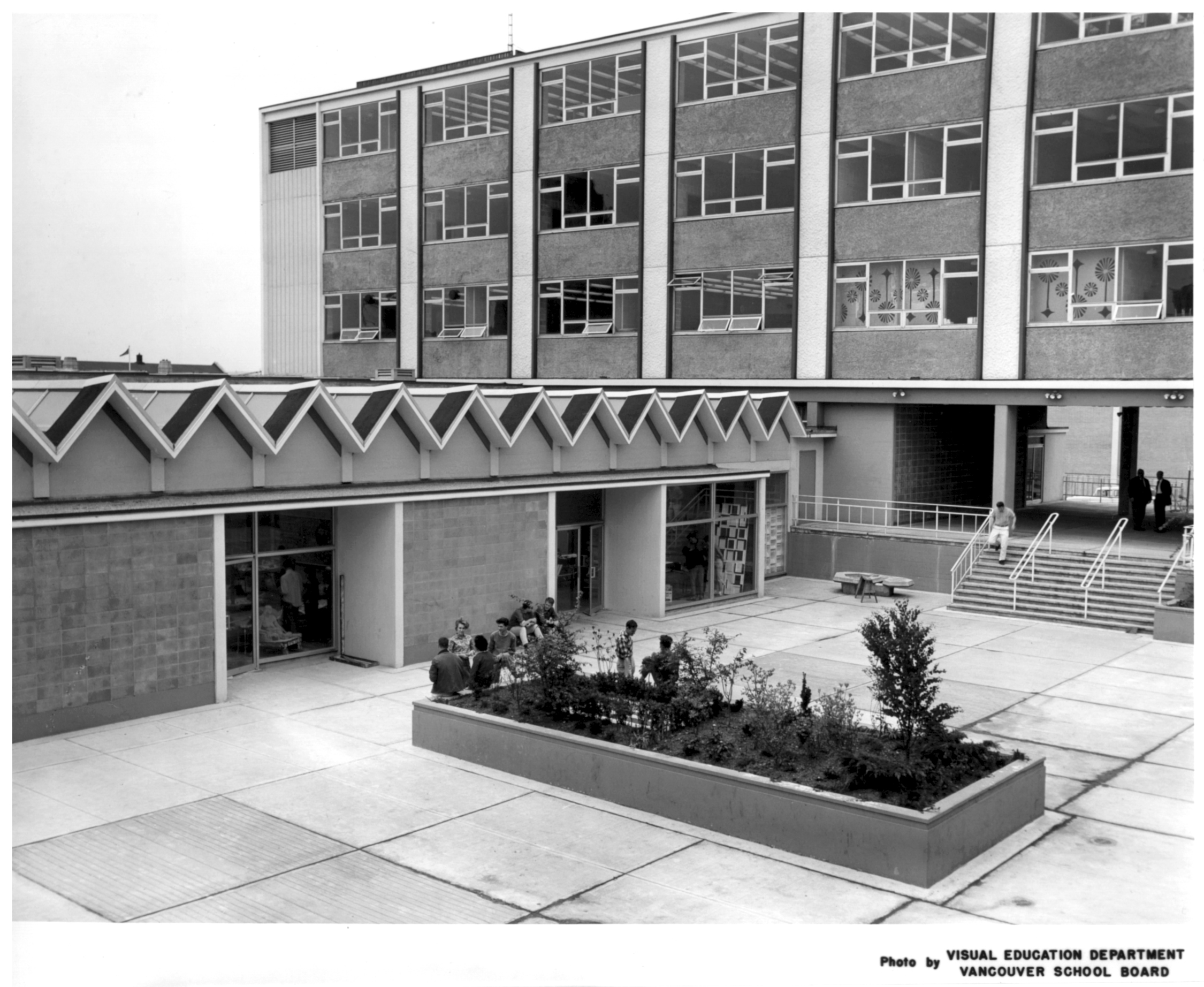
Ideal school

photo found @ http://www.ecuad.ca/about/history

1. My ideal school to teach at would probably look a lot like the ideal school I would like to attend: multi-story building with large windows in the classrooms for plenty of natural light, wide halls, large courtyards, extensive library, a gallery space, located on several acres in the New England or Portland area... large class rooms with small class size and computers available for all students.

2. I would like to teach at a school geared towards the arts, such as SCAD (but for kids age 13-18). Students at magnet schools seem to be more involved and committed to their school work. Students would have to take core math/english/science classes, but the majority of their time would be spend developing their creative stills and learning through the arts.

3. Teachers, students and parents would be have equal investment in the school. The school would be headed by a resident artist/professor with extensive experience in the arts and teaching.

4. Big enough to promote diversity and social networking but small enough so that students are familiar with all the teachers (even ones they don't have) and most of the students. 6 dedicated classrooms per floor, 3 story building.

5. See question 1.

6. Arts and core adecemics would run August-April with optional summer courses (fine art, dance, music, theater, architecture, design) available May-July.

7. The day would start at 9:30 with morning assembly (on Monday and Thursday) to discuss upcoming events, performances, gallery opening/closing, community projects and guest speakers. Classes would follow until 11:30 when all students would meet for lunch in the open dining area. Class would resume at 12:15 and continue until 3:00. Students have the option to return to their studio classes to work on projects after school until 6pm. Seniors will have access to their personal studios 24-7, with the understanding that they will be respectful and responsible.

8. Hiring criteria would include a love of the arts, creativity, alternative learning and teaching. Teachers don't necessarily need vast experience since it is a teaching school, for both the students and the teachers.

9. In addition to tests in their core classes, students would be assessed based on criteria specifics left up to the individual teachers. Class critiques and a final portfolio will be expected to be submitted at the end of each academic year. Equal emphasis will be put on the students development of their technical skills and the construction of a well-developed concept for each project,

10. Tablets could be used as an alternative to sketch books (depending on the students personal preference), textbooks would be provided on kindle or ipad, computers would be provided and available in all classrooms. Students would connect with other students around the country via skype to collaborate on certain projects and gallery openings and performances would be broadcast live on the internet during the events.

11. Parents are expected to be involved in their students progress and activities at the school. Parental involvement will be a key component in the students education and progression throughout their time at the school. Students will also be involed in several community projects thoughout the year including art activites with younger kids, other schools and at hospitals. Planning and realizing a city beautification projects will also be a part of the students senior year.

http://cdn.lightgalleries.net/4bd5ebf72b28c/images/artstudio_winsor-2.jpg


http://picasaweb.google.com/lh/photo/z-k4Ve7rV3K_YRglpfqdgg


http://wklondon.typepad.com/.a/6a00d8341c823e53ef0120a5645157970b-popup
(can you play nicely with other creative minds?)


http://www.scadconnector.com/wp-content/uploads/2009/01/knowlespic1.jpg


http://upload.wikimedia.org/wikipedia/commons/3/34/SCAD_Sidewalk_Arts_Festival.jpg

Monday, November 15, 2010

SAT Essay Responce

The response seemed incomplete and repetitive. The author made several statements but never backed it up with a "why". The writer used several words over and over, instead of using synonyms. The author did not support their reasoning with example from the readings like the prompt asked.
2/6 (SAT scoring)